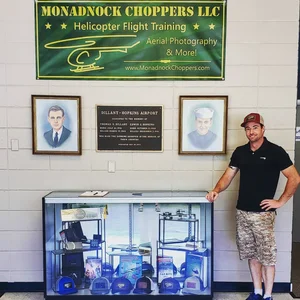
Winter Flying - A Brief Review
Winter in the Monadnock Region can be spectacular, with an endless amount of winter activities. Winter flying in New England, is also something special. The air is crisp, the landscapes are stunning, and aircraft often perform at their best. Still, winter demands a thoughtful approach from every pilot. At Monadnock Choppers, we fly year-round, and these are the things we always keep in mind—especially the positives winter brings along the way. Below is a quick refresher for our pilots on preparation for winter flying. For more information, the FAA FAST Winter Flying Tips is a great resource.
1. Winter Brings New Adventures!
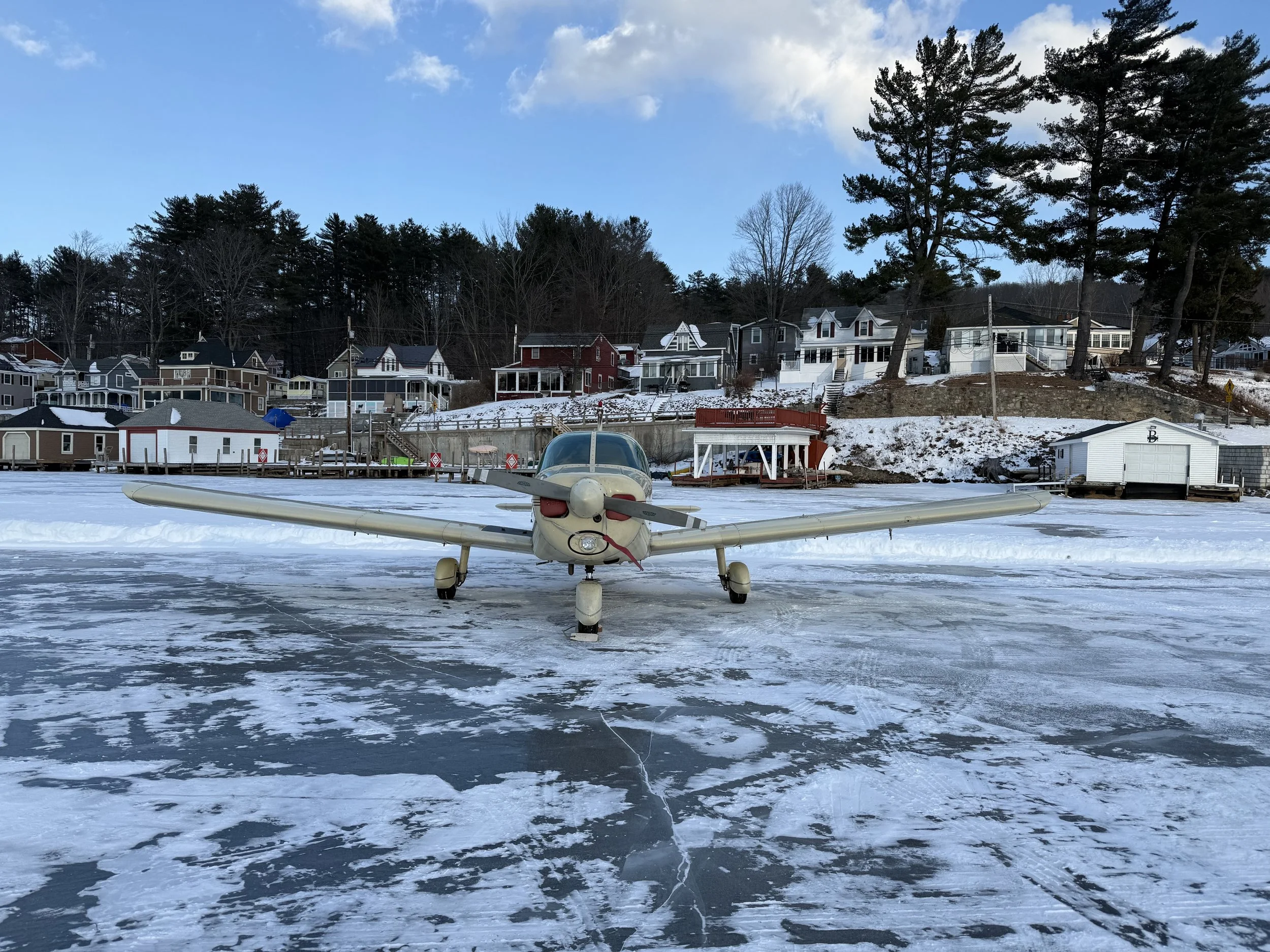
Our PA 140/160 at Alton Bay as part of a training flight for David Mark, PPL.
Positive: Winter opens doors to experiences you can’t get any other time of year. The Alton Bay Ice Runway (when open) is a rare, thrilling, bucket-list opportunity—smooth ice, wide-open surroundings, and an incredible flying story. You will also see the landscape with a new perspective. Set-up a lesson with one of our excellent instructors to review ice runway procedures.
Caution: With those adventures comes responsibility. Ice runways and lakes require precise aircraft control, disciplined airspeed management, and a full understanding of current conditions.
Preparation: Always check NOTAMs, follow procedures exactly, and respect the limits of both your aircraft and the surface beneath you.
2. Cold Winter Air = Great Aircraft Performance (But Respect the Edges and your equipment)
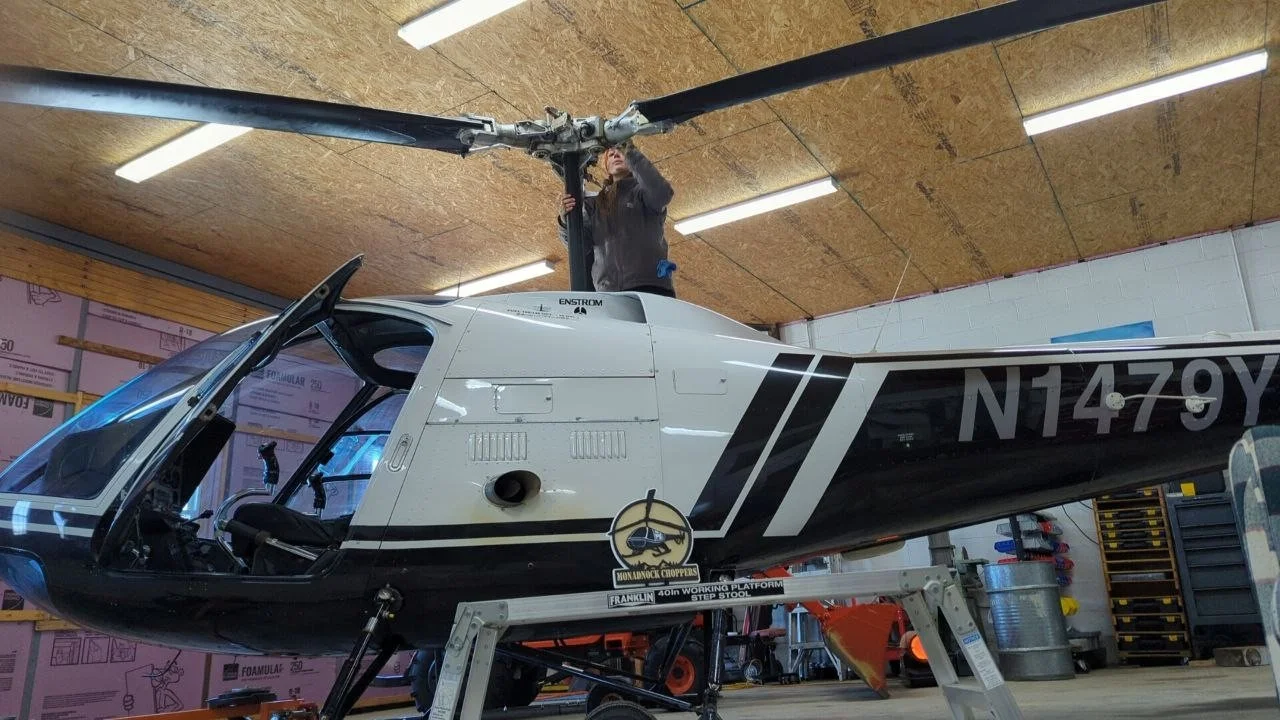
Student Chelsea, PPL pre-flighting the Enstrom for a winter flight.
Positive: Cold, dense air typically improves aircraft performance—expect shorter takeoff rolls, better climb rates, crisper handling, and improved engine efficiency. This performance advantage is one of winter’s real upsides, but it does not remove the season’s unique risks.
Caution: Don’t skimp on cold-weather procedures, your engine and aircraft will thank you. Follow FAA guidance on icing avoidance and procedures and treat any frost, ice, or snow on flying surfaces as a no-go. Don’t let the “extra” performance breed complacency—stay disciplined on airspeed, attitude, and energy management.
Preparation: Preheat the engine and follow POH/manufacturer guidance—proper preheating reduces wear, prevents hard starts, and improves lubrication on cold starts. Batteries also lose capacity in the cold, so keep them charged or protected; cold batteries can cause slow or failed starts. Drain and inspect fuel sumps for water during every preflight (condensation is more likely in cold weather), and use correct oil grades and cold-weather procedures recommended by the manufacturer. Winter increases the risk of induction/carburetor icing and airframe icing in visible moisture—know your aircraft’s certified icing capabilities and avoid inadvertent encounters..
Practical tips (short):
Preheat per POH/manufacturer recommendations; use a heated hangar or approved preheat system when available. AOPA
Keep batteries charged and consider removing or insulating wet-cell batteries if parked outside. faasafety.gov
Drain fuel sumps and check for water before every flight. AOPA
Plan for de/anti-icing and know HOT guidance when ground contamination is possible. Federal Aviation Administration
Review carb/induction icing risks and use carb heat/anti-ice procedures as required by the POH. Fed
AOPA has an excellent article that covers a plethora of ways a pilot should conduct operations differently in the winter - AOPA Cold Weather Operations
3. Winter Weather Brings Beautiful Flying and flight training
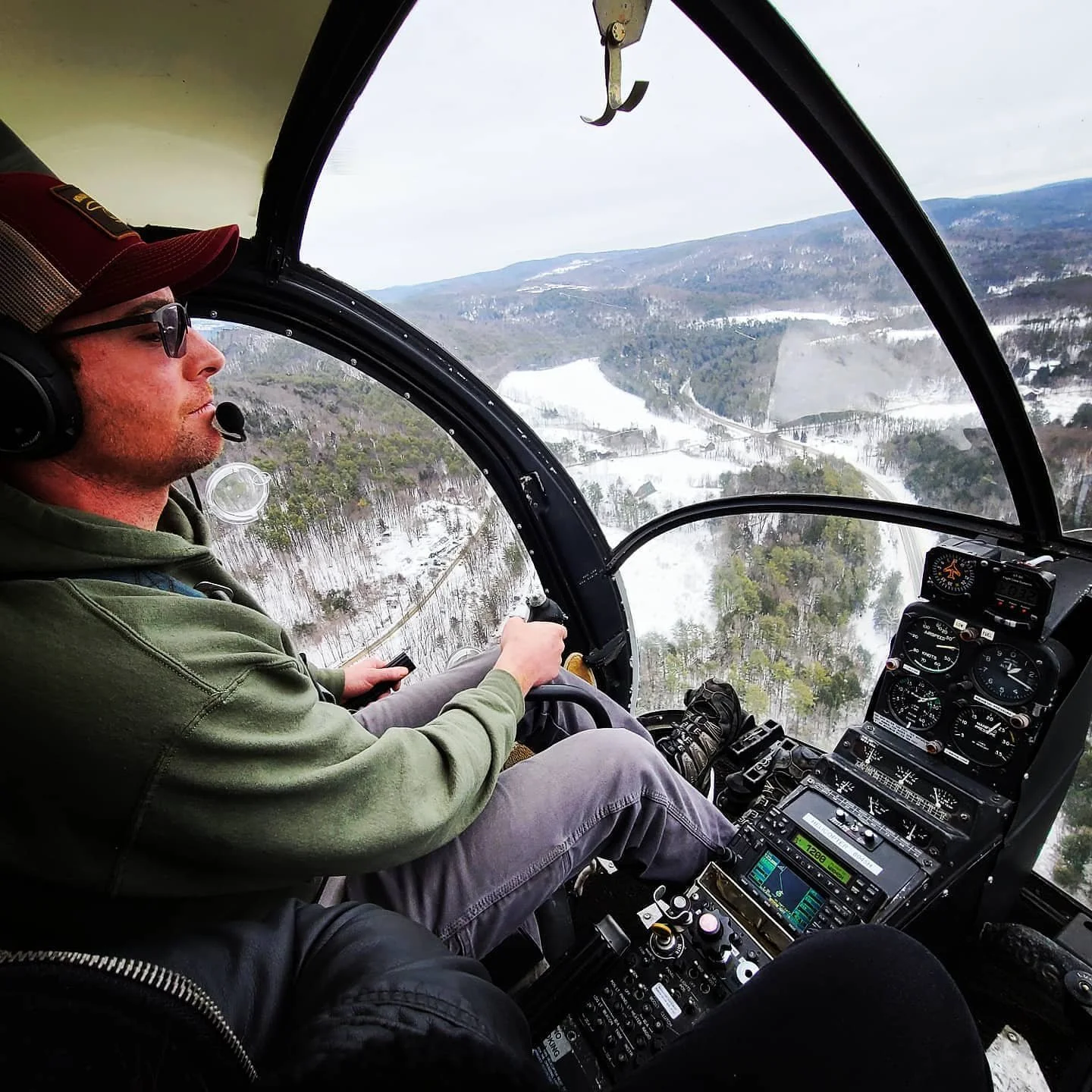
Owner, Kevin, in our old Hughes 269, enjoying the winter landscape.
Positives: Winter weather is fantastic for flight training including:
Crystal-Clear Visibility - Cold air holds less moisture, leading to excellent visibility and sharp horizon definition. Winter days often offer breathtaking scenery—mountains and ridgelines appear crisp, light pollution is minimal, and airport beacons and navigation lighting stand out like they were upgraded to HD. It's perfect for VFR navigation.
Smooth, Stable Air - With less convective activity and fewer thermal bumps, winter air is often smooth and stable—great for new students and for instrument training where steady platforms matter. Cross-country flights are more comfortable and predictable.
Incredible Night Flying - Winter means longer nights without late operating hours, ideal for night currency, training, and building confidence. The contrast of ground lights, snow reflection, and starlight can provide some of the most beautiful night flying you'll ever experience.
Caution: Conditions can change quickly and unpredictably. Plan for worse-than-forecast weather and keep alternates on the top of your mind. Conduct proper flight planning and weather briefings. Ice is always a concern during winter flying. When used early and correctly, anti-ice systems work extremely well but winter can be unforgiving if you delay.
Preparation: In winter, a standard weather briefing should be expanded on and other parameters looked at. Pilots should approach forecasting with intent and curiosity — looking not only at current conditions, but at trends, temperature profiles, and icing probability. Key briefing elements to review:
Freezing Levels & Temperature Profiles - Identify surface freezing temps and freezing layers aloft.
Icing Forecasts & PIREPs - Review AIRMET Zulu, SIGMETs for icing, and CIP/FIP charts if IFR. Check recent pilot reports and remember - there is No approval for flight into known icing = plan to avoid it entirely
Visibility & Ceilings - Watch for fog formation after snowmelt, temperature inversions, and low stratus. Radiation fog forms fast near dusk — and disappears slowly
Precipitation Type Matters - Warm front overruns can hide freezing rain above snow. Brief the difference between: Snow vs. wet snow, ice pellets, freezing drizzle/rain (the big “NOPE” unless properly equipped)
Winds & Contaminated Runways/Surfaces - Crosswinds + snow = reduced braking effectiveness so check field condition reports closely. A long runway becomes short fast when braking action is NIL. Helicopters operate on and over many surfaces and on the surface, ice, packed snow, or blowing powder can hide hazards. For helicopters, whiteout is a real risk on landing and takeoff.
Alternates & Escape Routes - In winter, your “Plan B” should be as strong as Plan A. Pick multiple alternates, not just one, and consider terrain, fuel burn, ceilings, and daylight
4. Winter flying is cozy
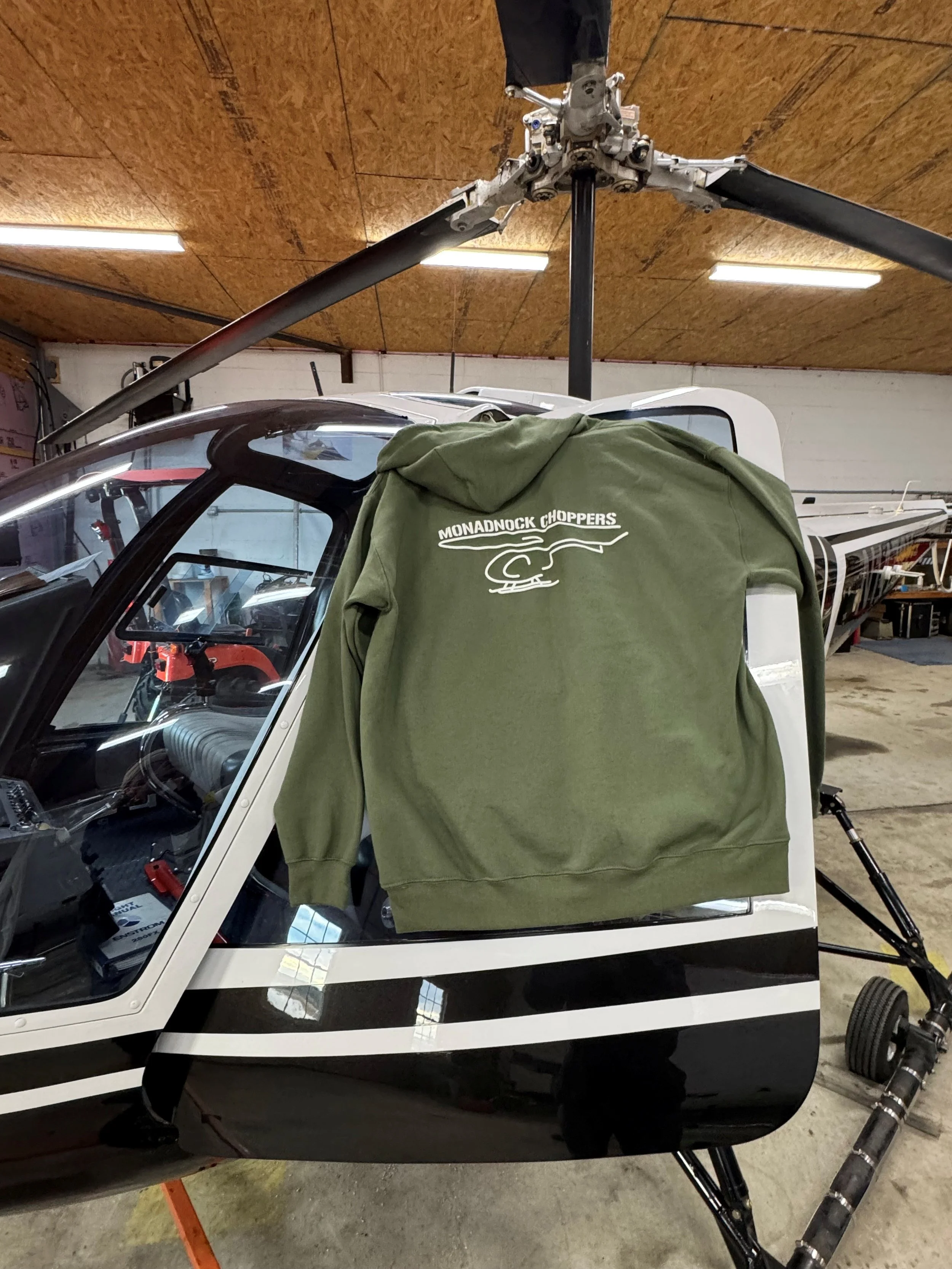
Purchase one of our cozy sweatshirts to stay warm!
Positive: Although the pre-flight and warm-up may be frosty, once the aircraft get running, it will be toasty inside! You have a lot more control over keeping the cabin warm in the winter, than trying to cool it down in the summer months. There’s also nothing more rewarding than flying for a hot cup of coffee or hot chocolate.
Caution: Being properly dressed is very important in the winter. If you are freezing and shivering during pre-flight, you may rush and miss something or start your take-off roll with frozen fingers. Being overheated in the cockpit is equally uncomfortable. Being properly dressed keeps you comfortable and focused in the cockpit.
Preparation: Always dress in layers that you can take on and off to be comfortable at all points in your flight; in the cockpit at different altitudes, during pre-flight, and all the in-between. If an unexpected landing ever occurs, being dressed for the real outside temperature can make all the difference. Prepare by dressing in layers and have a winter specific emergency bag with you at all times.
5. Final tips
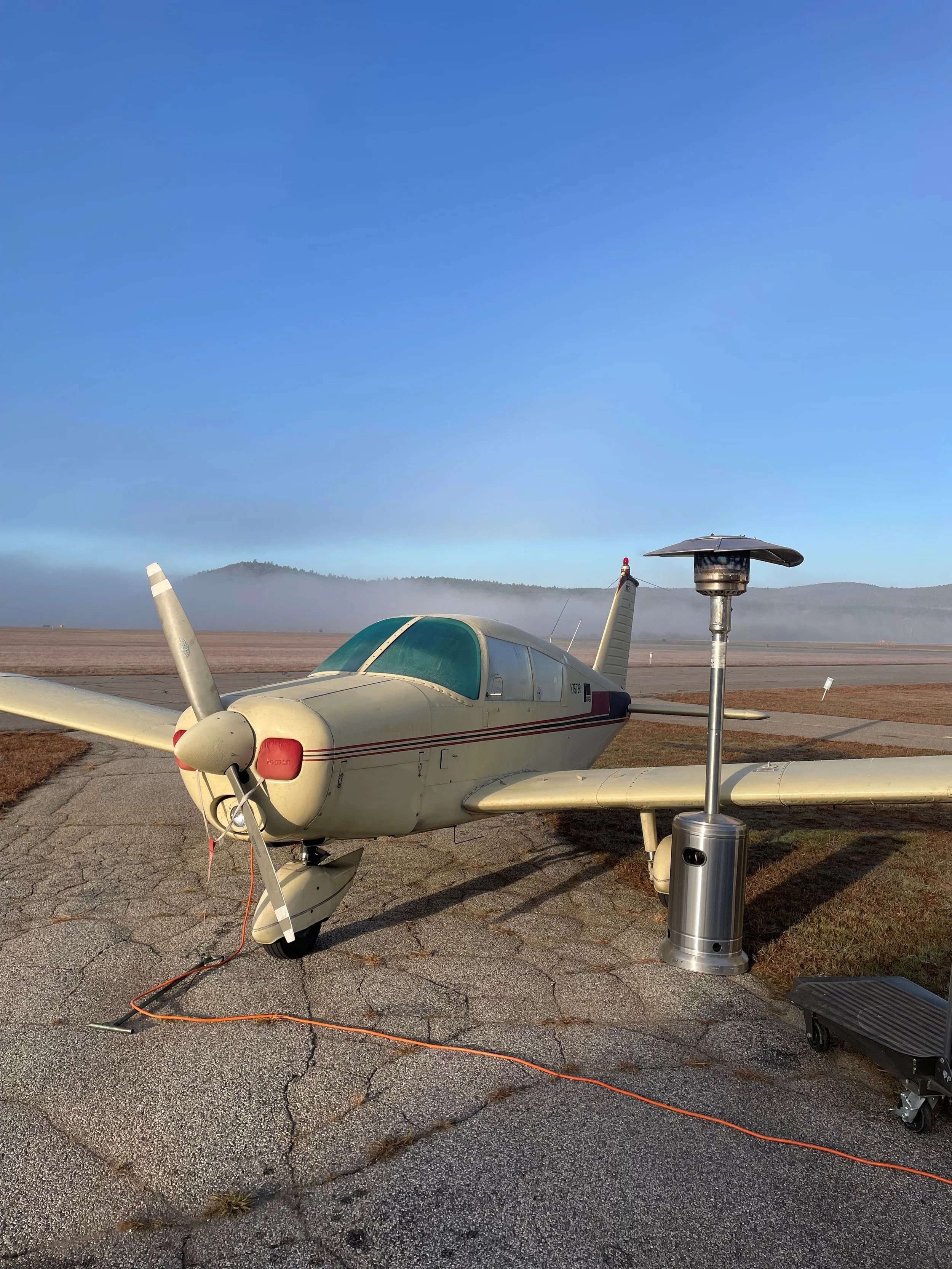
Always properly defrost before conducting a flight. A little ingenuity and patience goes a long way!
Follow guidance from resources like the FAA and AOPA on cold weather operations and preparations.
File a flight plan for safety, and NEVER operate in known icing conditions.
Check the weather! Getting an old school flight briefing from Flight Services (1-800-WX-BRIEF) is a good choice. Working with a human on the briefing may help you analysis your weather data more clearly.
Prepare a cold weather flying bag/kit.
Never forget your personal minimums (which may need to be updated for the winter) and P.A.V.E. checklist!
Winter flying can be some of the most rewarding flying of the entire year—as long as you pair winter’s advantages with smart preparation and disciplined habits. At Monadnock Choppers, we embrace the season, the challenges, and the beauty it brings to every flight.
Fly sharp, stay warm, and enjoy the best of winter from the sky!